
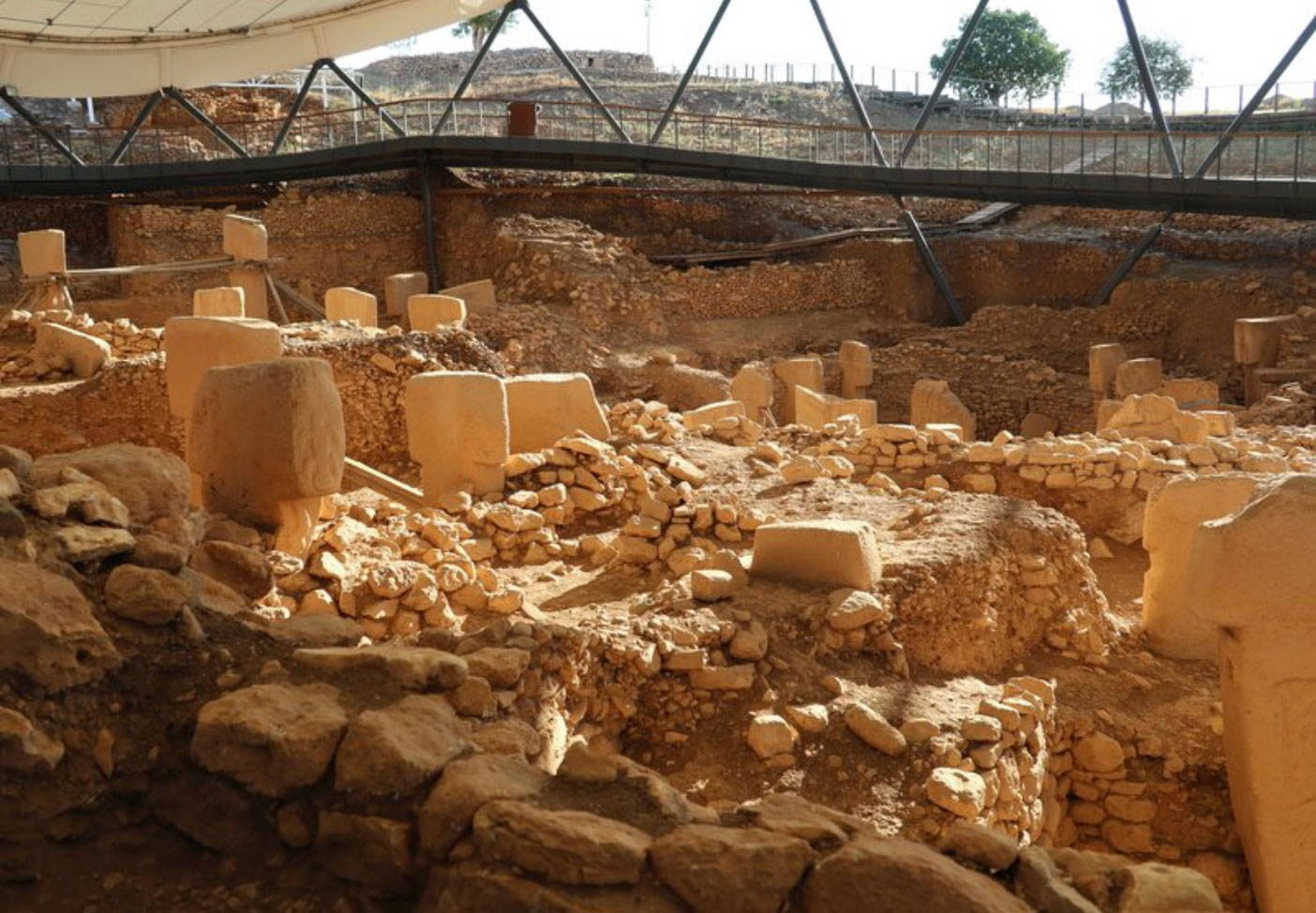
Image source: Archaeology Magazine
Excavations at the monumental southeastern Turkish site of Göbekli Tepe have yielded a stunning revelation: archaeologists have uncovered intact burials dating between roughly 8700 and 8000 B.C. Led by Julia Gresky of the German Archaeological Institute, researchers working at the world's oldest known temple complex have unearthed human remains that completely upend traditional interpretations of the pre-pottery Neolithic site, moving our understanding away from a purely ritual-only zone.
The Discovery
For decades, researchers assumed that Göbekli Tepe functioned exclusively as a ceremonial gathering space for ancient hunter-gatherers, rather than a domestic settlement where people lived and died. However, the recent identification of intact graves challenges this consensus. The breakthrough occurred when archaeologists identified two distinct burial contexts that preserved human remains in surprisingly good condition, breaking the pattern of scattered bone fragments typically recovered from the debris of the site's megalithic structures.
What Archaeologists Found
The field team uncovered two specific burial zones containing multiple individuals. The first discovery was a kidney-shaped pit holding the skeletal remains of a mature woman, a young man, and an adolescent girl. Nearby, a separate context yielded the solitary remains of a young woman placed carefully in a flexed position. Unlike the loose bone fragments historically found mixed into building debris, these skeletons were deposited in deliberate, structured underground spaces that survived millennia of environmental shift.
Historical Background
Built in stages between 9600 and 8200 B.C. by mobile hunter-gatherer societies, Göbekli Tepe features massive T-shaped limestone pillars adorned with complex animal reliefs. Before these recent discoveries, archaeologists had recovered isolated human bone fragments during excavations of specific buildings, but the lack of formal graves puzzled the academic community. Hypotheses ranged from excarnation practices to ritual deposition, but no concrete funerary architecture had ever been confirmed at the core of the monument complex.
What are your thoughts on this monumental shift in our understanding of early Neolithic societies? Do you believe Göbekli Tepe was secretly a permanent settlement all along, or were these burials anomalous exceptions to a purely ritual landscape? Share your perspective in the comments section below.
Scientific Analysis
Detailed osteological analysis conducted by Julia Gresky and her team revealed fascinating taphonomic signatures on the bones. The skeletal elements recovered from the intact graves bore striking similarities to the loose fragments found in building fills: the bones had been deliberately broken, heavily coated in calcium deposits, and gnawed on by rodents. These shared characteristics suggest that both the buried individuals and the scattered bone fragments shared a similar post-mortem history, potentially involving secondary handling, exposure, or natural disturbance from erosion and landslides originating higher up on the mound.
Why This Discovery Matters
This discovery forces archaeologists to reconsider the primary function of Göbekli Tepe within the ancient world. The presence of formal graves indicates that ordinary human life, death, and funerary rites were intimately bound to these monumental structures. It strengthens the argument that people may have actually lived at or immediately adjacent to the site, rather than merely visiting temporarily for collective ritual construction and seasonal festivals. This bridges the conceptual gap between domestic life and monumental sacred architecture in the early Neolithic.
What's Next?
Researchers plan to continue rigorous micro-morphological and isotopic analyses on the human remains to determine the geographic origins, diet, and familial relationships of the individuals buried at Göbekli Tepe. Future excavations will target higher elevations of the mound to locate potential source areas for the eroded burials and to search for additional domestic architecture that could confirm permanent settlement patterns at the complex.
Conclusion
The unearthing of intact burials at Göbekli Tepe marks a watershed moment in Neolithic studies. By linking human mortality directly to the world's oldest sanctuary, researchers are piecing together a more human-centric narrative of the hunter-gatherers who shaped the dawn of monumental architecture. As analytical techniques advance, Göbekli Tepe continues to prove that our ancient ancestors' lives were far more complex than we ever imagined.
Frequently Asked Questions
Who led the recent excavations that discovered the burials at Göbekli Tepe?
The research was led by Julia Gresky of the German Archaeological Institute, with findings originally detailed in the journal PLOS One.
When were the newly discovered graves dated to?
Radiocarbon and archaeological dating place these specific intact burials between approximately 8700 and 8000 B.C.
How do these burials challenge previous theories about Göbekli Tepe?
They suggest that people may have lived at the site permanently, rather than visiting it solely as a temporary ritual-only gathering space.
