
 |
| Image source: Ancient Origins |
In 1969, fifty kilometres east of Almaty, Kazakhstan, excavators cutting into the Issyk kurgan discovered an unlooted side chamber containing a fourth-century BC warrior covered in over four thousand individual gold ornaments. Yet resting alongside this gilded panoply lay an anomaly: a diminutive silver cup bearing twenty-five incised symbols that confounded international epigraphers for over half a century.
The Discovery
The Issyk kurgan is an earthen burial mound whose central chamber had been comprehensively stripped by grave robbers in classical antiquity. Fortunately for modern scholarship, the builders had prepared a peripheral southern chamber that evaded detection for millennia. When Soviet-era archaeologists systematically examined the subterranean timber structure, they realised the burial remained completely intact, preserved beneath dense layers of gravel and packed earth.
Within this timbered chamber lay the skeletal remains of an aristocratic youth, estimated to have died between the ages of 16 and 18. Surrounding the skeleton was an elite burial assemblage characteristic of the Saka culture, an eastern nomadic confederation belonging to the broader Scythian cultural continuum. The individual was immediately christened the 'Golden Man' due to the extraordinary scale and craftsmanship of the personal regalia deposited within the burial precinct.
What Archaeologists Found
The funerary goods demonstrated remarkable technological prowess and aesthetic complexity. The warrior was dressed in a red textile tunic entirely surfaced with embossed gold plaques featuring classical steppe zoomorphic motifs: snow leopards, birds of prey, mountain goats, and mythical beasts. A tall conical headdress, evoking the 'Saka tigrakhauda' (pointed-hat Saka) recorded in Old Persian royal inscriptions, was similarly adorned with miniature golden plumage and arrows.
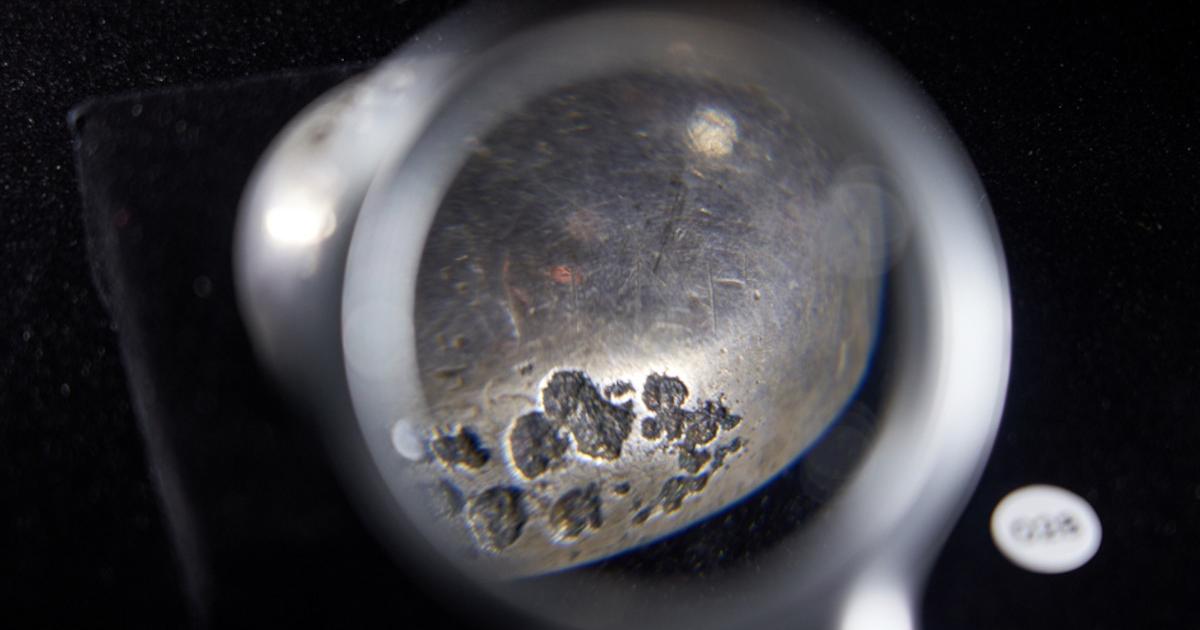
Alongside high-status weaponry, including an iron dagger and a long sword encased in chased scabbards, excavators recovered domestic and ritual items. Near the head of the youth sat a bronze mirror, numerous clay vessels, and an unassuming silver drinking vessel. Upon close inspection, the exterior wall of this silver bowl revealed a distinct inscription arranged in two clear lines. Unlike known Turkic runiform alphabets of later epochs, this script read horizontally from left to right and exhibited an advanced method of rendering distinct vocalic sounds, presenting epigraphers with an immediate palaeographic conundrum.
Historical Background
For decades following its discovery, the Issyk bowl was hailed as the premier epigraphic riddle of Central Asian archaeology. The Saka were widely perceived by classical Greek and Persian observers as largely non-literate pastoralists who maintained oral traditions rather than administrative writing. The presence of a settled, coherent orthography in an elite burial dated to circa 400 BC completely challenged prevailing assumptions regarding nomadic cultural development.
Initial attempts at translation produced sharply conflicting interpretations. Pan-Turkic hypotheses suggested the text recorded an archaic form of early Turkic, reading the glyphs as early prototypes of the Orkhon runes found in Mongolia. Conversely, Iranologists argued the characters captured an Eastern Iranian idiom related to Khotanese Saka. In 1992, the Hungarian philologist János Harmatta attempted a decipherment using the Kharoṣṭhī syllabary as an analytical framework. Harmatta proposed that the lines recorded a ceremonial toast, reading the text as a practical dedication regarding a cup containing wine and cooked provisions for the mortal. Despite Harmatta's prestige, his translation failed to achieve academic consensus, and the script remained officially unclassified.
Reader Debate: Given the geographical spread of this unique script between northern nomadic burial mounds and later sedentary administrative centres, do you think writing in Central Asia was developed independently by steppe pastoralists, or borrowed entirely from neighbouring empires? Share your perspective in the comments section below.
Scientific Analysis
The genuine breakthrough emerged through research conducted by a philological team at the University of Cologne. Linguists Svenja Bonmann, Jakob Halfmann, and Natalie Korobzow re-examined the mysterious writing system under the umbrella of the so-called 'unknown Kushan script'—a family of undeciphered inscriptions recorded across Tajikistan, Uzbekistan, and Afghanistan dating from the second century BC to the third century AD.
The Cologne researchers approached the problem using structural decipherment techniques akin to those historically applied to the Rosetta Stone and Persepolis cuneiform. By comparing newly discovered bilingual inscriptions carved into cliff faces at the Almosi Gorge in Tajikistan and trilingual records from Dašt-i Nāwur in Afghanistan, the scholars isolated repetitive royal titles and anthroponyms. Crucially, they identified the Imperial Aramaic and Bactrian equivalents of the imperial formula 'King of Kings', using these anchors to map precise phonetic values to the unknown glyphs.
Their quantitative analysis proved that the Issyk inscription represents the earliest verified iteration of this Kushan script. The underlying language was identified as an extinct, previously unknown Middle Iranian tongue, provisionally designated by the team as 'Eteo-Tocharian'. This tongue apparently served as an administrative and court vernacular within the Kushan Empire alongside standard Bactrian and Sanskrit, establishing a direct linguistic genealogy between the fourth-century BC nomadic Saka of Kazakhstan and the subsequent imperial Kushan dynasty.
Why This Discovery Matters
The decipherment carries profound consequences for the study of ancient Eurasia. Foremost, it permanently dismantles the historiographical notion that Eurasian steppe nomads lacked indigenous writing systems prior to the emergence of the Old Turkic runiform alphabet in the eighth century AD. The Issyk bowl demonstrates that elite steppe factions possessed written literacy four centuries before the Christian era.
Furthermore, the connection reveals direct institutional continuity between the mobile horse-riding aristocracy of the northern steppes and the urbanised administrative machinery of the Kushan state. The script served as a diplomatic and cultural bridge across disparate geographies, linking pastoralists from the Tian Shan mountains to royal centres in the Indus Valley. In Kazakhstan, where the Golden Warrior stands as a central emblem of sovereign statehood and cultural identity, this philological clarification anchors national history within a demonstrable linguistic reality.
What's Next?
While the University of Cologne team successfully identified over sixty percent of the phonetic values comprising the unknown Kushan alphabet, full decipherment of the entire corpus remains incomplete. Academic focus has now pivoted toward identifying additional short inscriptions documented across rock surfaces and ceramic fragments throughout the Fergana Valley and southern Central Asia.
Field epigraphers are deploying high-resolution photogrammetry and reflectance transformation imaging (RTI) to digitise weathered inscriptions in Tajikistan and Uzbekistan. Concurrently, regional museums are re-evaluating uncatalogued silver vessels and bronze artefacts from legacy excavations to identify overlooked graffito inscriptions that may supply the missing characters of this ancient Iranian alphabet.
Conclusion
The silver vessel of the Issyk kurgan has progressed from an isolated palaeographic anomaly into a foundational document of Central Asian antiquity. Fifty years of systematic investigation, crowned by contemporary comparative philology, have finally given voice to the nomadic elites who once dominated the vast interior of the Eurasian landmass.
Frequently Asked Questions
What is the Issyk inscription?
The Issyk inscription is a twenty-five-character text incised on a fourth-century BC silver bowl found in an elite Saka burial mound in Kazakhstan. It represents the earliest known example of the script later adopted across the Kushan Empire.
Who was the Golden Man found with the inscribed bowl?
The Golden Man was an aristocratic Saka warrior aged between 16 and 18, interred with over four thousand gold ornaments and comprehensive weaponry. Discovered in 1969, the burial remains one of the most significant archaeological finds in Central Asia.
Which language does the Issyk script actually record?
Recent research from the University of Cologne identifies the text as an early form of an unknown Middle Iranian language tentatively called Eteo-Tocharian. It served as an administrative and elite spoken language within the later Kushan realm.
How was the script finally deciphered?
Linguists utilised newly recorded multilingual cliff inscriptions from Tajikistan and Afghanistan to map known royal titles, such as 'King of Kings', onto the unknown symbols. This methodology generated verified phonetic values that matched the older characters on the Issyk vessel.
