
Image source: GDELT • bozemandailychronicle.com
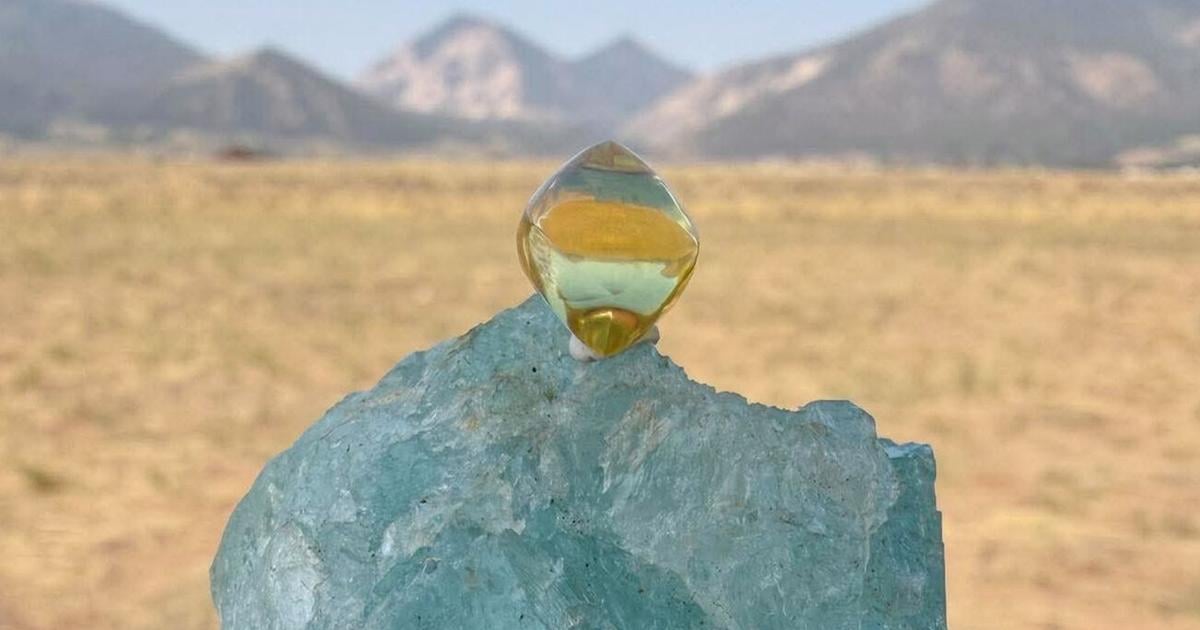
In 2026, prospector Jack Pearadin and field partner Michael Schumacher recovered a remarkable 6.03-carat rough gemstone from bucketed volcanic gravels at Crater of Diamonds State Park in Murfreesboro, Arkansas. Rinsed over an outdoor sorting screen, the lustrous specimen represents the largest diamond documented at the eroded lamproite field this year.
Pearadin, a United States Navy reservist originally from Missouri who relocated to Murfreesboro in 2013 to pursue amateur mineral hunting, uncovered the fingernail-sized crystal during an extended excavation effort. The find, subsequently named the "American Dream", drew immediate regional attention after Pearadin broadcast the wet-sieving sequence on a public video livestream. Independent evaluations of the stone’s commercial and geological value diverge sharply, with private collectors proposing valuations exceeding one million dollars, while certified appraisal professionals suggest a baseline commercial worth closer to two hundred and fifty thousand dollars.
The Discovery
The recovery occurred during a systematic gravel-washing operation conducted by Jack Pearadin and Wisconsin resident Michael Schumacher. Operating under the park’s standard field regulations, the pair extracted surface detritus and sub-surface aggregate into five-gallon buckets before conducting density separation at the site’s designated water washing stations. Upon washing away extraneous clay and alluvial silt, Pearadin overturned the remaining gravel concentrates onto an inspection bench, immediately exposing the distinctive octahedral facets of an exceptional yellow crystal.
Livestreamed footage of the sorting procedure captured the exact moment the 6.03-carat crystal emerged from the wet sedimentary matrix. Prior to this event, Pearadin had extracted more than three hundred smaller diamonds across more than twelve years of field prospecting. The specimen was later brought to Buena Vista, Colorado, where fellow mineral enthusiast Brian Busse examined the newly catalogued find alongside the discoverers on 9 August 2026.
What Archaeologists Found
Field staff and mineral examiners documented the recovered specimen as an intact, single-crystal natural diamond measuring approximately the size of an adult human fingernail, with a certified weight of 6.03 carats. The stone displays prominent natural growth faces and a pronounced yellow tint, possessing remarkable structural clarity prior to any lapidary processing.
Park officials, including assistant superintendent Waymon Cox and park interpreter Sarah Bivens, noted that the find significantly eclipses the standard yield from the site. Between 400 and 800 diamonds are recovered from the eroded volcanic soil annually, but the vast majority weigh approximately a quarter of a carat, typically measuring around 0.17 carats. While stones of multi-carat weight are documented intermittently—such as a 9-carat specimen uncovered by an Arkansas bank manager in 2020 and a 7-carat stone dug up by a French tourist in 2024—the Pearadin-Schumacher extraction ranks among the most substantial recovered since park record-keeping began.
Historical Background
Crater of Diamonds State Park occupies an eroded volcanic pipe known to geological science as the Prairie Creek lamproite. Commercial exploitation of the deposit began in the early twentieth century after diamonds were first identified in the local soil. The site operated under various private ventures as an open-pit commercial mine before closing and subsequently transitioning into an Arkansas state park in 1972. Since the state acquired the 37.5-acre ploughfield, visitors paying a standard entry fee have documented more than 37,000 individual diamonds.
The historical benchmark for North American mineralogy remains the legendary "Uncle Sam" diamond, unearthed at the Murfreesboro property in 1924. Weighing an astonishing 40.23 carats in its natural state, it stands as the largest diamond ever verified within the borders of the United States. Following commercial lapidary work, the Uncle Sam yielded an emerald-cut gem of 12.42 carats, which was permanently transferred to the Smithsonian National Museum of Natural History for exhibition within its prominent "Great American Diamonds" collection.
Scientific Analysis
Diamonds are formed at extreme depths exceeding 150 kilometres beneath the continental crust, where temperatures exceed 1,000 degrees Celsius and pressures surpass 45 kilobars. These mineral specimens crystallized within the Earth’s upper mantle billions of years ago before high-velocity volcanic eruptions, known as kimberlitic or lamproitic intrusions, propelled them upward toward the surface. Once the molten volcanic conduit solidified and subsequently weathered across millions of years, the diamonds were redeposited into local soils and secondary alluvial beds.
According to Nathan Renfro, senior manager at the Gemological Institute of America, natural diamond extraction sites linked to intact primary volcanic pipes are exceptionally rare within North America. The United States possesses only two verified primary occurrences where molten rock pipes breach the modern surface: the Prairie Creek pipe at Crater of Diamonds in Arkansas, and the Kelsey Lake site in Colorado, which underwent environmental land reclamation following the closure of commercial mining operations. Consequently, the Arkansas deposit remains the only primary diamond-bearing volcanic formation globally that allows unrestricted public entry and unregulated mineral retention.
Reader question: Does a rough diamond retain its initial mass and value once submitted to a professional lapidary workshop?
As Nathan Renfro points out, raw natural diamonds frequently exhibit asymmetrical morphology, external dissolution patterns, and internal inclusions. When master cutters process a rough specimen into a faceted gemstone for retail commerce, the material routinely sheds roughly 25 percent of its initial carat weight during sawing, grinding, and polishing. Laura Stanley, a certified gem appraiser operating in Little Rock, emphasizes that provenance profoundly influences secondary evaluation. While an ordinary 0.17-carat diamond recovered from the field commands approximately $700, a large, well-saturated 6-carat yellow crystal from Murfreesboro can command around $250,000 on the open collector market due to its rare geographic origin.
Why This Discovery Matters
The unearthing of the American Dream diamond highlights the unique scientific role of public-access mineral sites in the study of regional geological formations. Because diamond deposits globally are typically secured beneath militarized infrastructure and corporate monopolies, non-destructive public extraction provides an uncommon window into the geochemical distribution of mantle-derived crystals in continental cratons.
Furthermore, the discovery provides empirical confirmation that substantial diamond deposits remain preserved within the lower strata of the Prairie Creek lamproite pipe. Despite continuous public screening and agricultural ploughing across half a century of state stewardship, deep alluvial and elluvial matrices continue to yield multi-carat crystals that enhance our knowledge of North American kimberlite and lamproite volcanic pipes.
What's Next?
Pearadin and Schumacher intend to liquidate the 6.03-carat rough crystal through commercial collector channels or specialized gem auctioneers. Pearadin has stated that proceeds will be split evenly with Schumacher, with his share earmarked to finance the purchase and development of an independent commercial crystal-mining venture. Meanwhile, the park management continues its seasonal tractor tilling of the 37-acre search area to churn subterranean layers and expose unweathered lamproite soils for subsequent seasonal prospectors.
Conclusion
The extraction of the 6.03-carat "American Dream" demonstrates the enduring mineralogical potential of Arkansas's weathered volcanic pipes. As one of the rare primary diamond occurrences preserved in North America, the site bridges commercial geology, state heritage preservation, and amateur field recovery. Whether valued at a conservative quarter of a million dollars or assessed higher by private mineral collectors, the discovery marks an important milestone in modern American gemstone prospecting.
Frequently Asked Questions
What makes the Crater of Diamonds site geologically unique?
It represents the only primary volcanic diamond pipe in the world open to public excavation. Natural erosional processes continue to liberate deep-mantle diamonds directly from weathered lamproite matrix into the topsoil.
How large was the diamond discovered by Jack Pearadin?
The rough yellow diamond weighed 6.03 carats, measuring roughly the size of a fingernail. It ranks as the largest individual specimen recovered at the Arkansas park during the 2026 season.
What is the largest diamond ever recorded at the Arkansas field?
The historical record belongs to the 40.23-carat Uncle Sam diamond, uncovered at the site in 1924. It was later cut into a 12.42-carat gemstone now conserved at the Smithsonian National Museum of Natural History.
Suggested Internal Links
- lithic extraction sites — Contextual link to related AnotherShadows coverage of open-air mining and mineral resource identification.
- archaeological field surveys — Connects public alluvial prospecting methods to systematic surface survey methodology.
Suggested External Sources
- Bozeman Daily Chronicle News Report — News Publication — Source
