
AnotherShadows Digital Archaeology Magazine
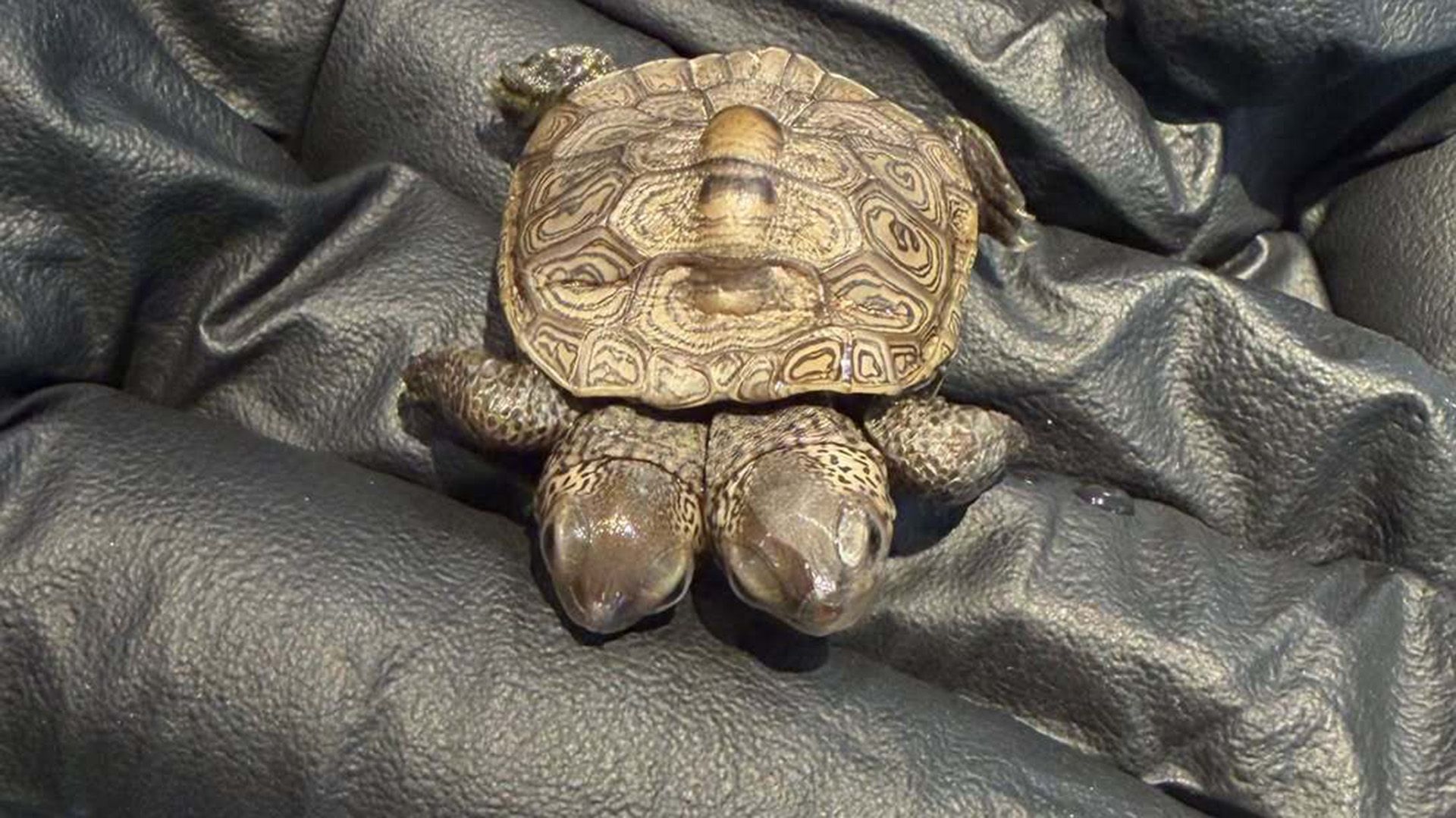
Image source: Live Science
In September, at a protected nesting site in Wellfleet, Massachusetts, field researchers made an unusual biological discovery. A rare two-headed diamondback terrapin hatchling, weighing just 0.18 ounces, was retrieved and brought to the Cape Wildlife Center in Barnstable on September 17 by representatives of the Mass Audubon Wellfleet Bay Wildlife Sanctuary.
The Discovery
The newly discovered specimen is a diamondback terrapin, scientifically designated as Malaclemys terrapin. Discovered by Mass Audubon Wellfleet Bay Wildlife Sanctuary representatives, the tiny reptile was promptly transferred into the care of the Cape Wildlife Center. Weighing only 5.2 grams, the hatchling immediately drew the attention of veterinary and wildlife specialists due to its distinct anatomical anomaly.
What Archaeologists Found
While this case involves a contemporary wildlife rescue rather than a subterranean excavation, specialists studying historical and archaeological deposits frequently encounter reptile iconography and remains, such as the 2,800-year-old burial in El Salvador featuring a person clutching a sea turtle vessel. In biological terms, what the wildlife center staff uncovered was an extant example of bicephaly occurring within a threatened local population, bridging modern zoological monitoring with deep historical contexts of human-animal interactions.
Historical Background
Diamondback terrapins have occupied the brackish marshlands along the Atlantic and Gulf coasts of the United States for millennia. Historically, these coastal environments served as vital resource zones for Indigenous populations and later European settlers. Today, diamondback terrapins are classified as threatened by the Massachusetts Endangered Species Act, and their broader federal conservation status remains under formal review, reflecting centuries of shifting ecological pressures upon their native habitats.
Scientific Analysis
The condition observed in the Cape Cod hatchling is bicephaly, a rare developmental disorder typically caused by the incomplete splitting of a single embryo during identical twin formation. This results in conjoined twins sharing a single body while possessing two fully independent, functional heads. Zak Mertz, CEO of New England Wildlife Centers, noted that current research points to a combination of genetic and epigenetic factors. Environmental variables such as incubation temperature, humidity, physical characteristics of nesting sites, and potential parental environmental exposures are believed to influence the frequency of this condition.
Why This Discovery Matters
Documenting bicephaly in wild populations provides crucial data points for environmental and population health monitoring. Research from 2021 indicates that bicepilitic reptile embryos and hatchlings often exhibit craniofacial and spinal abnormalities alongside smaller physical statures. These developmental hurdles directly impact coordinated movement, feeding, and survival. Observing such anomalies helps scientists gauge how environmental stressors and restricted gene pools impact threatened species over time.
Debate Question for Our Readers: Given that bicephaly often stems from environmental and genetic pressures within constrained habitats, should conservation strategies prioritize artificial incubation controls to minimize developmental anomalies, or is it more scientifically valuable to let natural selection take its course in the wild?
What's Next?
Veterinarians and animal care specialists at the Cape Wildlife Center are maintaining continuous observation of the rare terrapin. As Zak Mertz emphasized, caring for the animal offers a unique learning opportunity to inform future research and veterinary practices concerning congenital developmental disorders in reptiles.
Conclusion
The discovery of the two-headed diamondback terrapin on Cape Cod underscores the complex interplay between genetics, environment, and wildlife survival. By monitoring and studying this rare case of bicephaly, researchers gain valuable insights into the ecological health of coastal marshlands and the resilience of threatened species navigating modern environmental challenges.
Frequently Asked Questions
What is bicephaly in turtles?
Bicephaly is a rare developmental disorder caused by the incomplete splitting of a single embryo, resulting in conjoined twins that share one body with two independent heads.
Where was the two-headed turtle found?
The hatchling was discovered at a protected nesting site in Wellfleet, Massachusetts, and subsequently brought to the Cape Wildlife Center in Barnstable.
Are two-headed turtles common in the wild?
No, they are exceptionally rare, though this specimen marks the third bicephalic terrapin found in the Cape Cod area over the past five years.
What is the conservation status of the diamondback terrapin?
Diamondback terrapins are classified as threatened under the Massachusetts Endangered Species Act, and their federal conservation status is currently under review.
