
Image source: Live Science
Deep beneath the domestic footprints of ancient Scandinavia, archaeologists have uncovered unsettling evidence that human remains were regularly integrated into living spaces, wells, and postholes. A recent comprehensive study published in the Journal of Archaeological Method and Theory analyses 192 human bones from settlement sites across modern-day Denmark, Norway, and Sweden, shedding light on the darker aspects of domestic life during the Iron and Viking Ages. Rather than resting within traditional cemeteries or monumental burial mounds, these victims of interpersonal violence ended up beneath the very floors where families walked, ate, and slept.
The Discovery
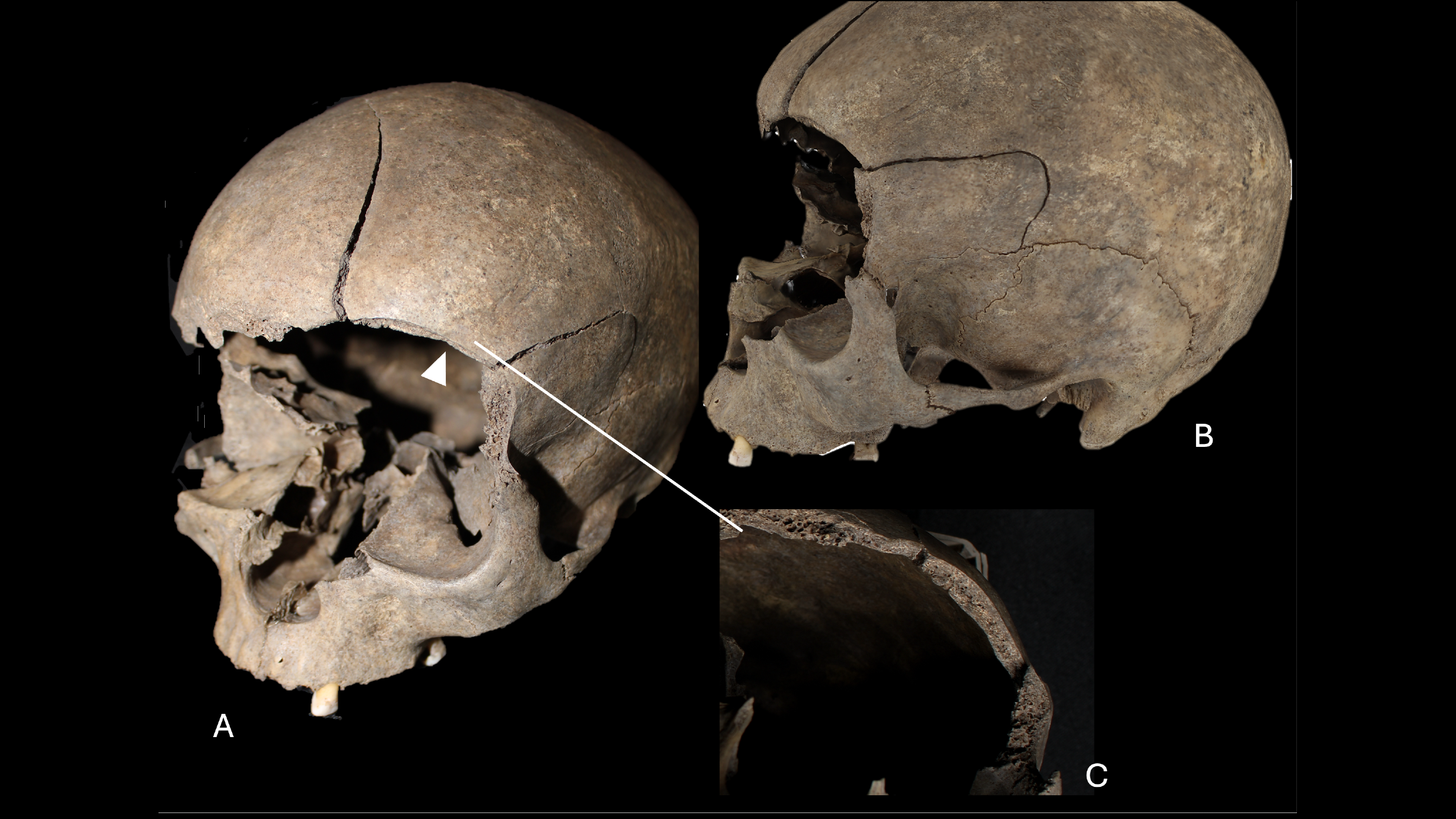
The investigation into atypical mortuary practices was spearheaded by an international team of researchers, including lead author Marianne Hem Eriksen of the National Museum of Denmark. By examining skeletal elements recovered from non-funerary contexts—such as houses, yards, feasting halls, and water wells—the team identified a distinct pattern of violence that bypassed standard burial rituals. Among the most striking discoveries is the frontal bone of a young child embedded directly into the floorboards of an Iron Age dwelling in Denmark. Radiocarbon dating indicates this structural placement occurred long after the child's death, revealing a deliberate choice to curate and repurpose human skeletal material within a domestic environment.
What Archaeologists Found
The study catalogued 12 individuals bearing definitive signs of perimortem trauma, meaning injuries sustained at or near the time of death. Half of these documented cases involved severe cranial trauma, while four individuals suffered multiple overlapping wounds. While the majority of the victims identified as adult males, the dataset also included two adult females and at least one child. In one particular case at a Viking Age site active between 750 and 1050 A.D., researchers located a young woman's skull inside a well situated near a cluster of residential structures. This cranium displayed clear traces of sharp-force trauma, likely inflicted by a sword or axe. Another notable find emerged from Gammel Lejre, a royal feasting hall often linked to the legendary origins of the Old English epic Beowulf. Just south of this hall, archaeologists excavated the remains of a man whose skeleton recorded numerous healed and unhealed blunt force injuries, pointing to a grueling physical existence.
Historical Background
Spanning roughly from 500 B.C. to A.D. 1050, the Scandinavian Iron Age and Viking Ages were periods marked by rising social stratification, shifting power dynamics, and escalating community friction. While historical narratives frequently spotlight elite warrior burials and grand ship cremations, domestic violence and localized aggression remain less understood. The inclusion of bodies and body parts in structural elements like foundation pits, postholes, and flooring indicates that death management extended far beyond sacred burial grounds. The physical evidence points toward a society where certain vulnerable individuals faced fatal physical altercations within their immediate communities, followed by non-standard disposal methods that defied conventional religious or cultural norms.
Scientific Analysis
Advanced scientific methodologies proved crucial in distinguishing between normal mortuary customs and these anomalous domestic depositions. DNA analyses performed on the child's skull from Aalborg confirmed it belonged to a small boy aged two to four who had suffered a lethal sword cut. Intriguingly, radiocarbon dating revealed that the child's bone predated the construction of the house by as much as two centuries. This chronological discrepancy demonstrates that the artifact was likely preserved above ground as a familial heirloom, a trophy, or a protective talisman before being permanently worked into the floor of a lived-in structure. Osteological analysis of the other recovered bones similarly utilized microscopic trauma identification to differentiate between ritual sacrifice, domestic abuse, and judicial execution.
Why This Discovery Matters
This atypical dataset fundamentally challenges modern assumptions regarding how ancient Scandinavian populations perceived life, death, and the physical body. The presence of human skeletal elements inside residential areas suggests a worldview where boundaries between the living and the dead were far more fluid than previously suspected. Furthermore, the findings raise difficult questions about social inequality during the Viking Age. Researchers posit that the victims found in wells, pits, and floors may have belonged to marginalized groups whose lives were not universally commemorated through standard funerary architecture. This implies a darker social reality where certain individuals were treated as expendable by their communities.
How do you interpret the decision of a community to walk daily over the skull of a child? Share your thoughts in the comments below.
What's Next?
As archaeological science continues to refine ancient DNA extraction and stable isotope analysis, researchers plan to expand their search parameters across additional Scandinavian settlement sites. Future investigations will aim to trace the geographic origins of these victims to determine whether they were locals, captives, or outsiders integrated into Iron Age households under duress. By combining high-precision dating with detailed osteological trauma mapping, specialists hope to construct a more granular timeline of domestic violence and ritualized curation throughout northern Europe.
Ultimately, these fragmented bones force modern observers to confront the complex, often brutal realities of daily existence in the Viking Age. They serve as a stark reminder that the archaeological record is shaped as much by exclusion and violence as it is by grand monuments and treasured hoards.
Frequently Asked Questions
What was discovered in the floor of the Iron Age Scandinavian house?
Archaeologists found the frontal bone of a child aged two to four who had sustained a fatal sword cut. Radiocarbon dating showed the skull was centuries older than the house itself, indicating it was kept before being placed in the floor.
How old is the child's skull found in Denmark?
The child's skull dates back to the Scandinavian Iron Age, specifically associated with a house built between 500 and 1 B.C., though the bone itself is up to two centuries older than the structure.
What did researchers find near the Beowulf feasting hall in Gammel Lejre?
Researchers excavated the skeleton of a man bearing numerous healed and unhealed blunt force injuries located directly south of the royal feasting hall.
Why were some human remains placed in wells and houses?
Scientists suggest these individuals may have been victims of domestic violence, community aggression, or corporal punishment, reflecting a society where certain vulnerable lives were not given traditional burials.
